
Overseas Shipping Crates Built for Global Compliance
Ensure your international exports clear customs and survive the ocean voyage with ISPM-15 compliant, weather-proofed wooden crates designed for multi-modal transport.
The Perils of International Logistics
Sending goods across borders exposes them to salt spray, rough handling, and strict regulatory eyes. Using domestic standard shipping crates for overseas transit invites corrosion damage and customs rejection.
Moisture & "Container Rain"
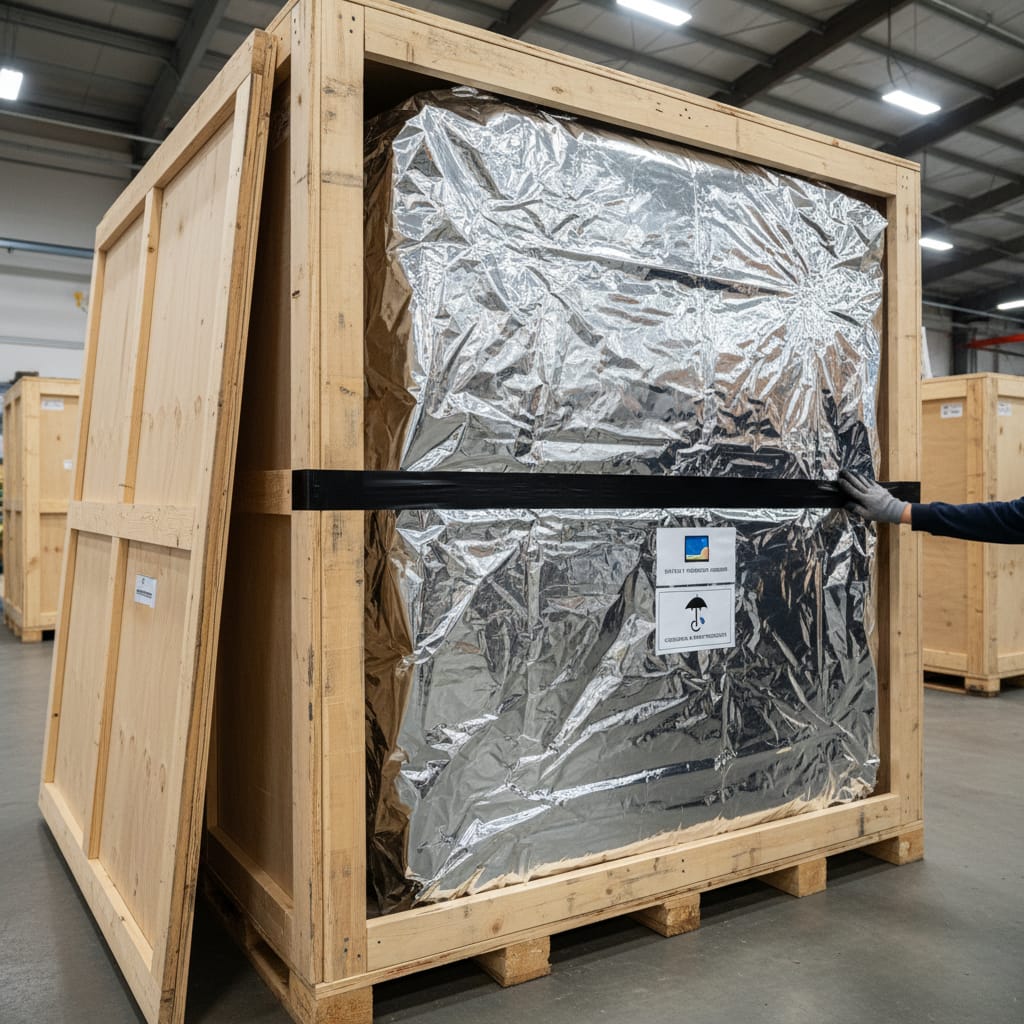
Temperature fluctuations at sea cause condensation known as “container rain,” rusting metal parts. Without moisture barriers and desiccants inside heavy-duty crates, your product arrives corroded.
Customs Blockades
Foreign ports will reject or burn shipments that lack proper ISPM-15 markings. You cannot afford the risk of using non-compliant wood, unlike simpler domestic reusable crates.
Handling Uncertainty
Your crate will be handled by unknown equipment in foreign ports. Designs lacking 4-way forklift entry or reinforced corners fail during intermodal transfers, risking stackable integrity.
Engineered for the Long Haul
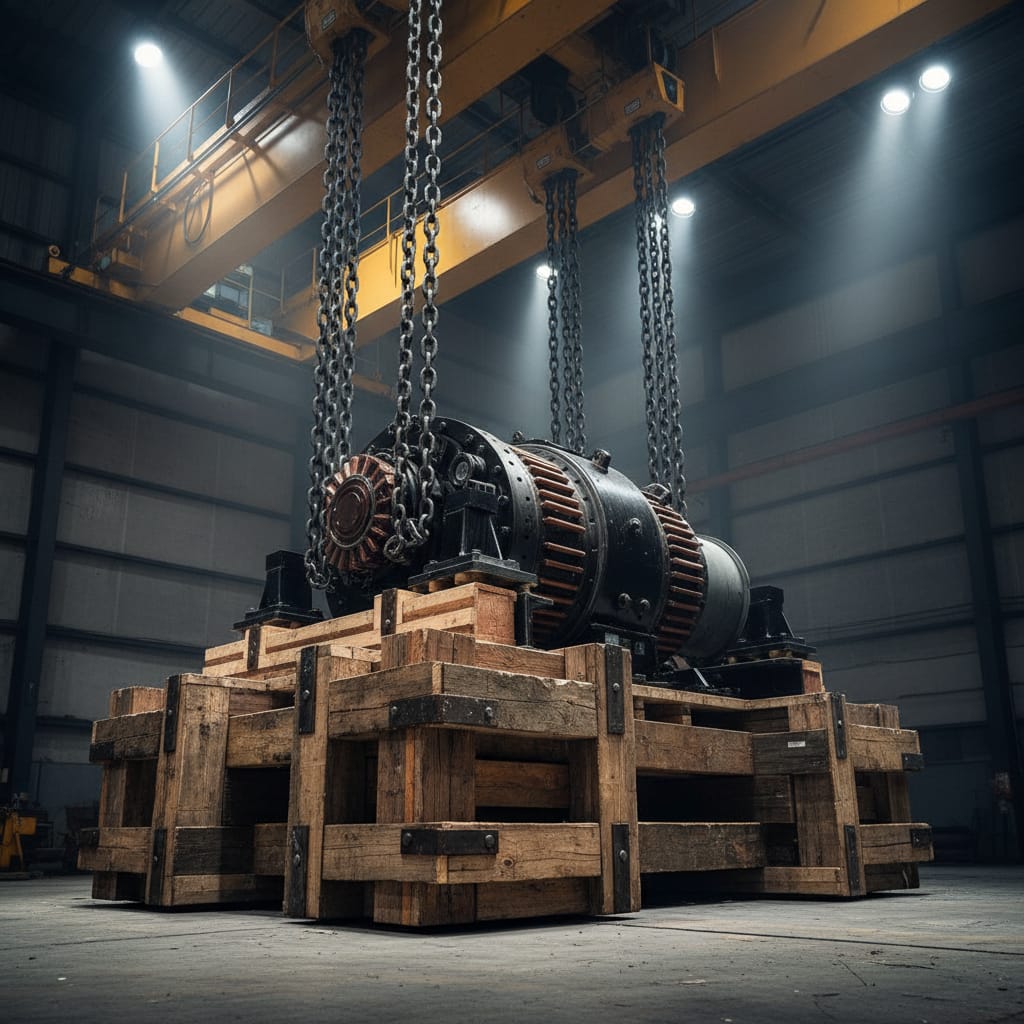
We manufacture overseas shipping crates that act as a fortress against the elements. From air-freight optimized plywood to sea-worthy timber with VCI protection, we ensure your goods arrive in the same condition they left India.
Multi-Modal Durability
We design specifically for the rigors of Road-Rail-Sea transfers. Our custom-built export crates feature bolted skids and heavy bracing to withstand crane lifts and shunting shocks.
Weatherproofing
We utilize tarpaulin linings, vacuum sealing, and VCI technology to combat salt spray. This protection is non-negotiable for secure overseas shipping of machinery.
Air Freight Optimization
For urgent air cargo, we use engineered plywood to reduce tare weight. This saves you significant freight costs while providing strength superior to standard boxes.
Universal Handling
All our export designs include 4-way pallet entry. This ensures that no matter what forklift or pallet jack is used at the destination—Europe or USA—your shipment moves smoothly.
Genuine people. The Wooden Boxes were strong and neat. Our shipment went a long distance without any damage. The owner is very polite and helpful.
Manish Aggarwal
General Supply
Very fast service. I called them for an urgent requirement and got the material the next day. The Pallet Crate is strong and well built.
H.S. Grewal
Transportation Equipment
Bought standard GMA Pallets from them. Strong wood quality. We use them roughly at the site and they are still in good condition. Highly recommended.
Dinesh S.
Building Materials
Clean finishing on the Wooden Crates. There were no rough nails or sharp edges coming out, so our product remained safe from scratches. Good service by the team.
Rahul V.
Appliance
These Pallet Boxes are very sturdy. We used them for heavy storage and they held up well even after rough use. Delivery was fast which helped us a lot during the busy season.
Gurdeep C.
Agricultural
Good quality Block Pallets. We stack them high in the warehouse and they are very stable. Pricing is also better than the market rates. Reliable supplier for bulk orders.
Praveen L.
Warehouse & Storage
Prepare Your Cargo for the World
Step 1: Route Analysis: We determine if your shipment is going by Air (weight focus) or Sea (moisture focus).
Step 2: Protection Design: We select the right wood treatment and internal barriers.
Step 3: Certified Dispatch: We deliver the crate with all monitoring labels applied.
View Box Styles
Don't let the ocean destroy your product.
We guarantee compliance; our ISPM-15 stamps are fully traceable and recognized by customs authorities worldwide.
How do you prevent rust during sea voyages?
Preventing rust during sea voyages is a battle against salt, humidity, and temperature fluctuations. We employ a rigorous preservation system known as VCI (Volatile Corrosion Inhibitor) packaging. We wrap your metal goods in VCI barrier materials that release corrosion-inhibiting molecules, forming a protective shield on the metal surface. Additionally, we use vacuum sealing (hermetic sealing) with aluminized barrier foils to completely isolate the product from the moisture-laden sea air. Desiccants (silica gel) are placed inside to absorb any trapped moisture. This combination prevents the “container rain” effect—condensation inside the crate—ensuring your machinery arrives as bright and clean as it left your factory. For overseas shipping, this protection is mandatory, not optional.
What is the difference between air and sea crates?
The primary difference lies in weight versus protection. For air freight, weight is the biggest cost driver. We design air crates using lightweight, high-strength materials like plywood and cleats to minimize tare weight while maintaining structural safety. For sea freight, moisture protection and stacking strength are the priorities. Sea crates are typically built with heavier timber to withstand the stacking pressure in containers and the rough pitching of the ship. They also feature more robust waterproofing measures like tar-lined roofs and VCI protection. We analyze your shipping mode to engineer the crate correctly—saving you money on air freight weight or saving your product from sea corrosion. One size does not fit all in global logistics.
Why is the ISPM-15 stamp important?
The ISPM-15 stamp is the visual proof that your wooden crate complies with international phytosanitary regulations. It certifies that the wood has been heat-treated to kill pests, preventing bio-contamination of foreign ecosystems. Without this stamp, your crate is legally considered “untreated” by port authorities. This leads to immediate customs holds, potential fines, and the requirement to fumigate or destroy the packaging at your expense. In many cases, the cargo itself may be rejected. We ensure every piece of solid wood in our export crates bears a legible, traceable IPPC stamp. This stamp is your crate’s visa; without it, your shipment isn’t going anywhere. We guarantee compliance to keep your supply chain moving.
Can your crates handle multi-modal transport?
Yes, our overseas shipping crates are engineered for the realities of multi-modal transport—typically involving truck, rail, crane, and ship in a single journey. This requires a crate that can withstand diverse stresses: the vibration of the road, the shunting shocks of rail, the compression of container stacking, and the dynamic lateral forces of a rolling ship. We design with reinforced skids for forklift and crane handling, and diagonal bracing to prevent the crate from “racking” (twisting) during lifts. We bolt critical connections to prevent loosening. By designing for the worst-case scenario in the logistics chain, we ensure your goods survive the entire journey, from your loading dock in India to the customer’s floor in Germany or the USA.
Do you use vacuum sealing for export?
Yes, vacuum sealing is a standard part of our high-value export packaging service. We place the product inside a barrier bag made of heavy-duty aluminum laminate. We then evacuate the air from the bag and heat-seal it. This process achieves two things: it dramatically reduces the volume of air (and thus moisture) inside the package, and it immobilizes the product within a tight skin. The barrier foil prevents new moisture from entering. Combined with desiccants, this creates a perfectly dry, stable environment for the product. Vacuum sealing is essential for electronics, precision machinery, and ferrous metals traveling through humid climate zones. It provides the ultimate level of protection against environmental degradation.

