
Cost-Effective Shipping Crates for Rugged Industrial Loads
Reduce packaging costs without compromising structural safety with open-slat and skeleton wooden crates designed for heavy machinery, pipes, and non-sensitive cargo.
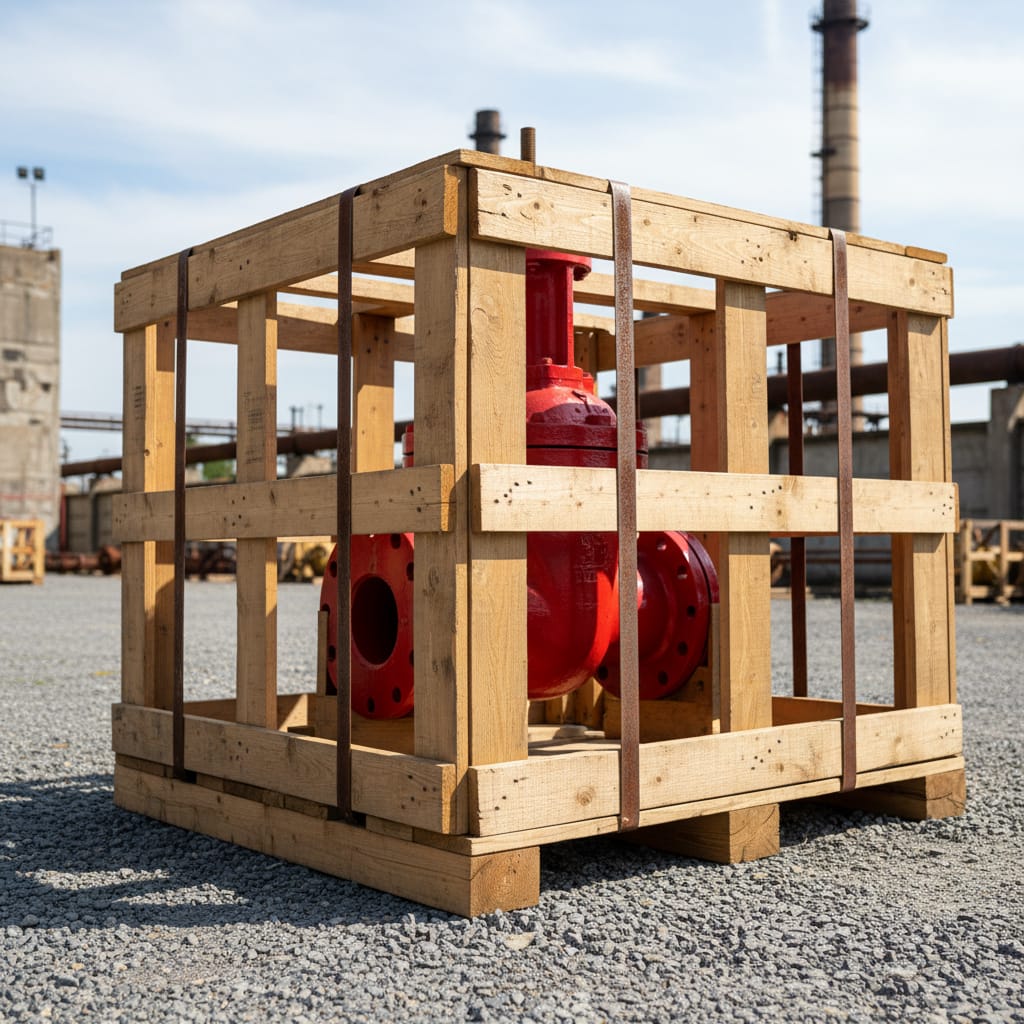
Are You Over-Paying for Unnecessary Enclosures?
Not every shipment needs a fully enclosed fortress. Paying for solid plywood walls when shipping rugged steel structures is a waste of budget. You need efficient heavy-duty crate options that protect the structure without hiding the product.
Budget Drain
Fully sheathed boxes use 40% more wood than skeleton crates. If your product is robust (like pipes or castings), using custom enclosed boxes burns money that could be saved with an open design.
Inspection Delays
Customs officers often need to verify the cargo. Sealed boxes may be pried open, causing damage. Open-slat overseas shipping crates allow visual verification without touching the package, speeding up clearance.
Moisture Trapping
Enclosed boxes can trap humidity, leading to “sweating.” For outdoor-grade equipment, an open design allows natural ventilation, preventing the condensation issues common in sealed reusable bins.
Skeleton Crates Engineered for Economy and Strength
We help you choose the right tool for the job. Our shipping crates utilize a robust frame-and-brace design to secure heavy loads while reducing material usage and tare weight.
Frame-and-Brace Design
We focus strength where it matters—on the load-bearing frame. By optimizing the lumber placement, we create wooden shipping crates that hold tons of weight using less material.
Ventilation & Airflow
Our open-slat designs are perfect for products that need to breathe or are stored outdoors. This natural airflow prevents rust on rugged iron components, unlike sealed glass packaging.
Easy Identification
Handlers can see exactly what they are lifting. This visibility ensures they use the correct lifting points, reducing the risk of accidents common with opaque stackable boxes.
Cost Reduction
By reducing the board-footage of lumber used, we lower your unit cost significantly. This makes skeleton crates the ideal choice for domestic transport of raw materials and heavy equipment.
Genuine people. The Wooden Boxes were strong and neat. Our shipment went a long distance without any damage. The owner is very polite and helpful.
Manish Aggarwal
General Supply
Very fast service. I called them for an urgent requirement and got the material the next day. The Pallet Crate is strong and well built.
H.S. Grewal
Transportation Equipment
Bought standard GMA Pallets from them. Strong wood quality. We use them roughly at the site and they are still in good condition. Highly recommended.
Dinesh S.
Building Materials
Clean finishing on the Wooden Crates. There were no rough nails or sharp edges coming out, so our product remained safe from scratches. Good service by the team.
Rahul V.
Appliance
These Pallet Boxes are very sturdy. We used them for heavy storage and they held up well even after rough use. Delivery was fast which helped us a lot during the busy season.
Gurdeep C.
Agricultural
Good quality Block Pallets. We stack them high in the warehouse and they are very stable. Pricing is also better than the market rates. Reliable supplier for bulk orders.
Praveen L.
Warehouse & Storage
Choose the Right Protection for Your Budget
Step 1: Fragility Check: We assess if your product needs dust protection (Box) or just impact protection (Crate).
Step 2: Cost Analysis: We demonstrate the savings of switching to an open-frame design.
Step 3: Rapid Build: We construct the frames to your exact specs for immediate use.
View Crate Styles
Stop over-packaging your rugged goods.
We guarantee strength; our skeleton crates are engineered with diagonal bracing to prevent racking and twisting.
What is the difference between a box and a crate?
In industrial packaging terminology, a “box” is fully enclosed with solid walls (plywood or timber), offering complete protection against dust, moisture, and prying eyes. A “crate” (specifically a skeleton crate) has an open-slat design with gaps between the boards. Crates are the ideal choice for rugged goods that do not require protection from air or dust, such as large valves, steel pipes, or heavy castings. The open design reduces the amount of lumber used, making crates significantly lighter and cheaper than fully enclosed boxes. We help you decide: if your product is sensitive, box it; if it’s tough and just needs structural securement, crate it. Choosing the right style is the first step in optimizing your packaging budget.
How much cheaper are skeleton crates?
Skeleton crates are typically 30% to 50% cheaper than fully enclosed boxes of the same size. This savings comes from the reduction in raw material (lumber/plywood) and the reduced labor time required for assembly. Furthermore, because they are lighter, you also save on freight costs, especially for air shipments or long-haul road transport. For domestic shipping of industrial equipment where weather protection isn’t a primary concern (or can be handled by a simple plastic wrap), skeleton crates offer the best strength-to-cost ratio. We can provide a comparative quote showing the cost difference between a box and a crate for your specific load, helping you make a data-driven decision to cut packaging costs.
Can shipping crates be stored outdoors?
Skeleton shipping crates can be stored outdoors, but the product inside is exposed to the elements. The wood itself, if proper species are selected, can withstand temporary outdoor storage. However, because the crate is open, rain, dust, and sunlight will reach your product. If outdoor storage is required, we recommend using a skeleton crate in conjunction with a heavy-duty VCI bag or tarpaulin cover for the product. Alternatively, we can design the crate with a solid roof and open sides to provide basic rain shelter while allowing airflow. We assess your supply chain storage conditions to recommend the right level of protection. Don’t let your cost-saving crate result in rusted product; ensure the preservation strategy matches the storage environment.
Do crates offer security for my goods?
While skeleton crates are open, they still offer security through immobilization and visibility. Because the contents are visible, handlers can see exactly what they are lifting, reducing the risk of accidental damage due to improper handling. To prevent pilferage of smaller parts, we can cover the crate with wire mesh or securely strap components to the base. For high-security items, a fully enclosed box is better. However, for large industrial machinery, the sheer size and weight are the main deterrents. We use heavy-duty bolting and strapping to ensure that the load cannot be removed from the crate without significant effort and tools. We design the crate to keep the honest people honest and the heavy loads secure.
Are your crates capable of stacking?
Yes, we engineer our shipping crates for stackability. Even with an open design, we incorporate reinforced vertical corner posts and top-frame headers that can support the weight of superimposed loads. This allows you to stack crates in your warehouse or in a truck, maximizing space utilization. We calculate the dynamic and static load capacity to ensure the bottom crate does not crush under the weight of the stack. It is vital to inform us of your stacking requirements so we can design the frame with adequate timber thickness. A properly engineered skeleton crate is just as stackable as a solid box, providing vertical storage efficiency without the extra material cost.

