
Automotive Parts Crates for CKD and SKD Supply Chains
Streamline your Tier-1 logistics with engineered engine, transmission, and body panel packaging designed to maximize container fill rates and support Just-In-Time delivery to OEMs.
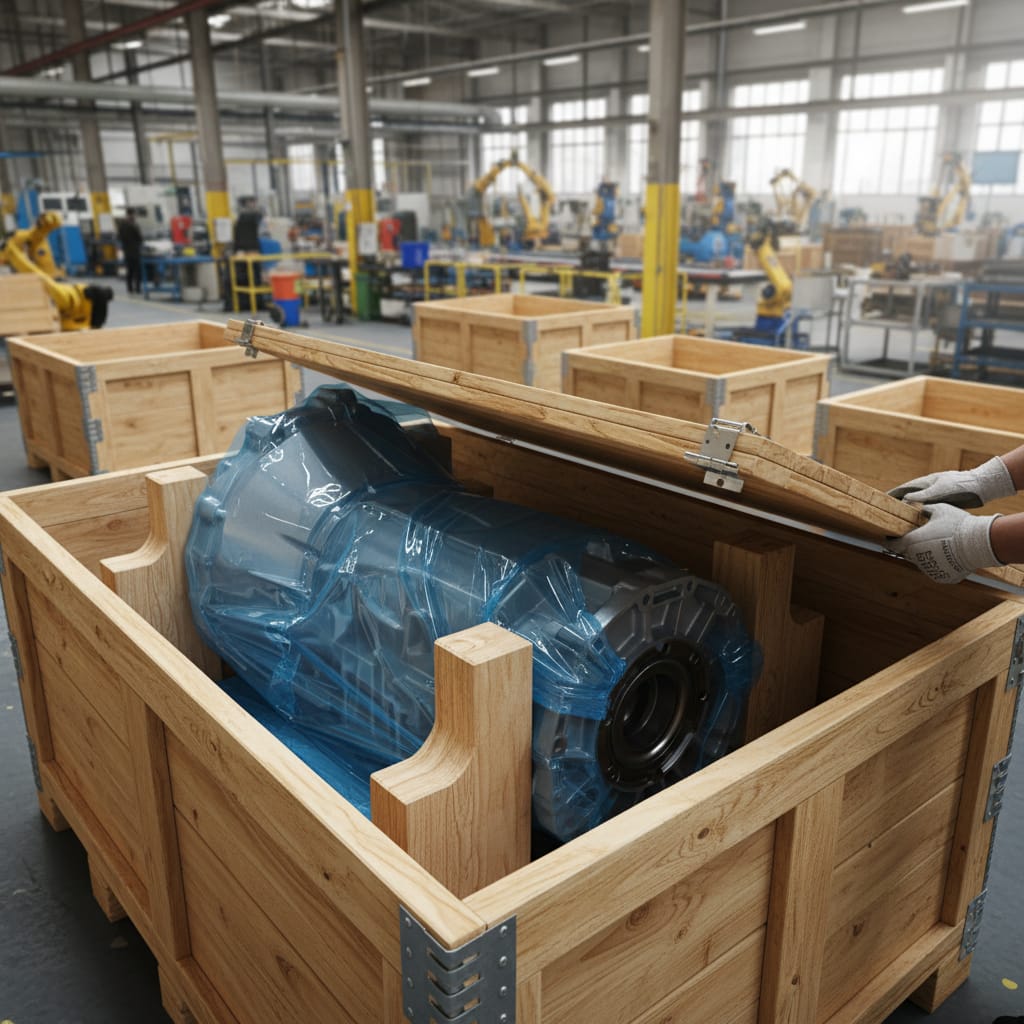
Is Your Packaging Stopping the Assembly Line?
In the automotive world, a delayed or damaged part halts the entire production line, incurring massive penalties. Generic shipping crates that fail to protect against corrosion or maximize container space act as a brake on your profitability.
Container Inefficiency
Poorly dimensioned crates waste cubic volume in sea containers. Every inch of “dead air” increases your freight cost per part, unlike optimized stackable modular units that ensure 95%+ cube utilization.
Corrosion Risks
Machined surfaces like crankshafts and blocks rust quickly in saline sea air. Without integrated VCI protection within heavy-duty crates, your CKD kits arrive requiring expensive re-work or scrapping.
Return Logistics Costs
For domestic loops, using one-way packaging is financial waste. You need collapsible, reusable transit packaging (RTP) that reduces return freight volume and lowers your cost-per-trip.
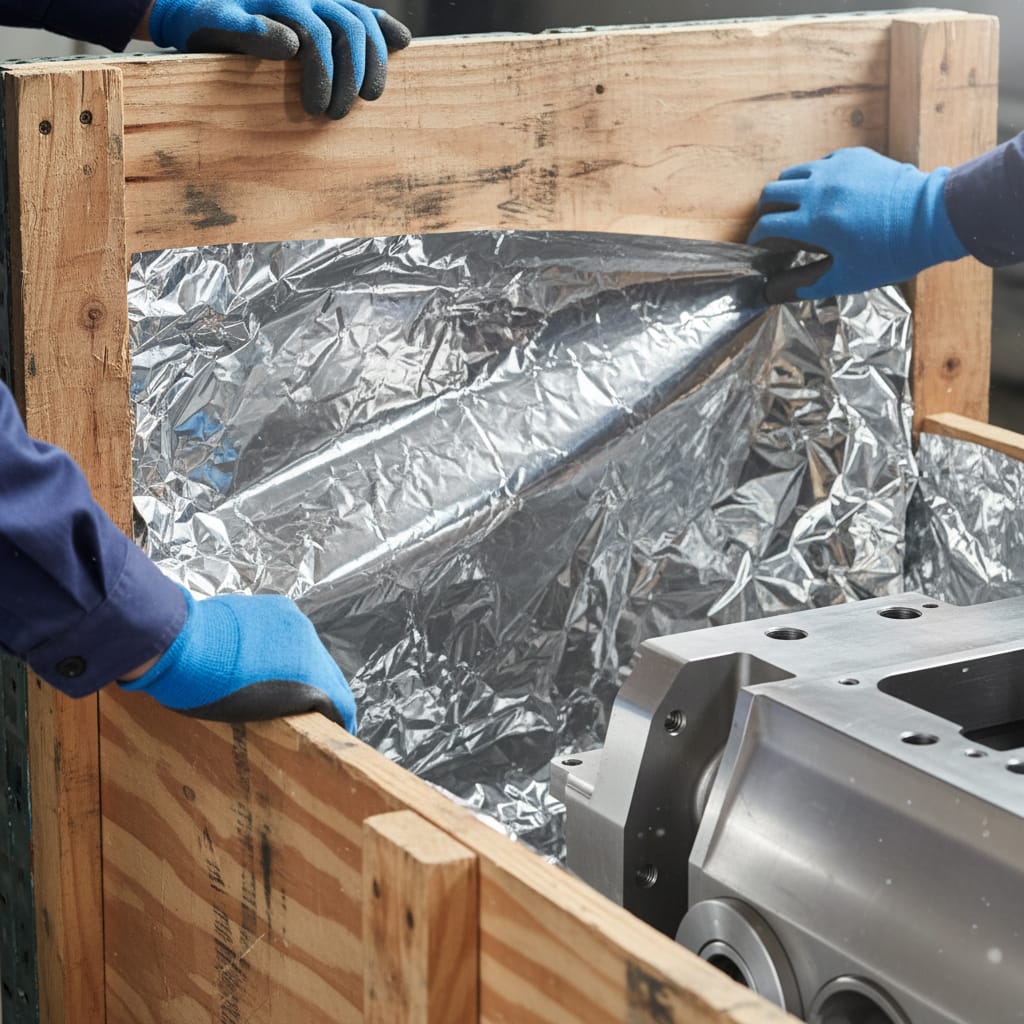
Engineered for the Automotive Loop
We specialize in CKD (Completely Knocked Down) and SKD packaging. From engine cradles to windshield racks, our solutions are engineered to withstand the specific stresses of the automotive supply chain while protecting Class-A surfaces.
Component-Specific Design
We design internal dunnage for complex geometries like transmissions and axles. Whether it’s a custom-built engine skid or a body panel rack, we ensure zero movement during transit.
VCI Integration
We integrate Volatile Corrosion Inhibitor (VCI) films and emitters directly into the crate design. This creates a chemical barrier that keeps your parts rust-free, essential for overseas shipping.
OEM Standards
We understand OEM specifications (Maruti, Honda, Hero). Our packaging meets strict cleanliness and labeling standards, ensuring your shipment is accepted at the receiving dock without friction.
Glass & Fragile Parts
For automotive glass and electronics, we utilize specialized glass packaging techniques with vibration-dampening foam to prevent cracks and micro-fractures.
Genuine people. The Wooden Boxes were strong and neat. Our shipment went a long distance without any damage. The owner is very polite and helpful.
Manish Aggarwal
General Supply
Very fast service. I called them for an urgent requirement and got the material the next day. The Pallet Crate is strong and well built.
H.S. Grewal
Transportation Equipment
Bought standard GMA Pallets from them. Strong wood quality. We use them roughly at the site and they are still in good condition. Highly recommended.
Dinesh S.
Building Materials
Clean finishing on the Wooden Crates. There were no rough nails or sharp edges coming out, so our product remained safe from scratches. Good service by the team.
Rahul V.
Appliance
These Pallet Boxes are very sturdy. We used them for heavy storage and they held up well even after rough use. Delivery was fast which helped us a lot during the busy season.
Gurdeep C.
Agricultural
Good quality Block Pallets. We stack them high in the warehouse and they are very stable. Pricing is also better than the market rates. Reliable supplier for bulk orders.
Praveen L.
Warehouse & Storage
Drive Efficiency into Your Supply Chain
Step 1: Part Analysis: We examine your CAD data or physical part to determine support points.
Step 2: Load Planning: We design the crate to perfectly fit standard shipping containers.
Step 3: Pilot Run: We produce a sample batch for fitment and transit trials.
View Auto-Parts Gallery
Stop shipping air and rust.
We guarantee compatibility; if our packaging doesn’t meet your OEM’s receiving standards, we redesign it at our cost.
How do VCI automotive crates prevent rust during shipping?
Volatile Corrosion Inhibitor (VCI) crates work by creating a chemical atmosphere within the enclosed packaging that neutralizes the electrochemical process of oxidation. We integrate VCI films and emitters directly into the crate design, which release invisible, odorless molecules that settle on exposed metal surfaces like engine blocks and transmission gears. This molecular layer acts as a barrier against moisture and salt air, which are prevalent during overseas shipping. For automotive exporters, this eliminates the need for messy grease or oil coatings that require expensive cleaning upon arrival. Our VCI-integrated solutions ensure that your CKD and SKD kits arrive at the OEM assembly line factory-fresh and ready for immediate installation. Protect your precision-machined components from corrosion claims by upgrading to our chemically engineered packaging.
What is the difference between CKD and SKD packaging?
CKD (Completely Knocked Down) and SKD (Semi-Knocked Down) packaging refer to the level of disassembly of a vehicle or machine for export. CKD packaging involves packing individual components—like loose engines, body panels, and axles—into highly dense configurations to maximize container space. This requires intricate internal dunnage to prevent parts from touching. SKD packaging typically involves larger sub-assemblies, such as a car body with the engine already mounted, requiring larger, heavy-duty crates with specialized blocking and bracing. We engineer specific solutions for both methods, focusing on optimizing the “cube utilization” of shipping containers to lower freight costs while ensuring Transit Damage Protection. Whether you are shipping individual gears or full chassis assemblies, our design team creates the optimal pack density for your logistics model.
Do you design crates for specific OEM standards like Maruti or Honda?
Yes, we have extensive experience designing packaging that meets the rigorous specifications of major automotive OEMs such as Maruti Suzuki, Honda, and Hero. We understand that every OEM has a unique set of receiving standards regarding crate dimensions, labeling, cleanliness, and pallet entry points. Non-compliance with these standards can result in shipment rejection at the dock or vendor rating penalties. Our engineering team works with your CAD data to design crates that integrate seamlessly with the OEM’s automated production lines and robotic unloading systems. We conduct pilot runs and fitment trials to guarantee compatibility before mass production. Partnering with us ensures your packaging acts as a facilitator of your relationship with Tier-1 and OEM clients, not a bottleneck.
Are your automotive crates stackable for warehouse efficiency?
Stackability is a core feature of our automotive crate designs. We engineer our crates with reinforced corner posts and interlocking modular footprints to ensure safe vertical stacking in warehouses and shipping containers. This capability is essential for maximizing floor space in high-density industrial storage zones and reducing freight costs by utilizing the full height of sea containers. Unlike generic boxes that may crush under weight, our heavy-duty designs are calculated to support dynamic loads of multiple tons. This structural integrity prevents the collapse of stacks, which can damage expensive automotive components and endanger warehouse personnel. We analyze the Center of Gravity and total stack weight to certify safe stacking limits for your specific inventory.
How do you handle return logistics for automotive crates?
For domestic automotive supply loops, we recommend and manufacture collapsible, reusable transit packaging (RTP). Unlike one-way export crates, these units are designed to withstand dozens of round trips between the supplier and the OEM. When empty, the crates collapse or nest to reduce their volume significantly, minimizing the freight cost of the return journey. This closed-loop system drastically lowers the packaging cost-per-part over time and reduces wood waste. We use durable hardware and high-grade timber or hybrid materials to ensure the crates survive repeated handling and transport. If you are supplying parts to plants within North India, switching to a robust returnable crate system can improve your logistics ROI substantially. Contact us to analyze your supply loop efficiency.

